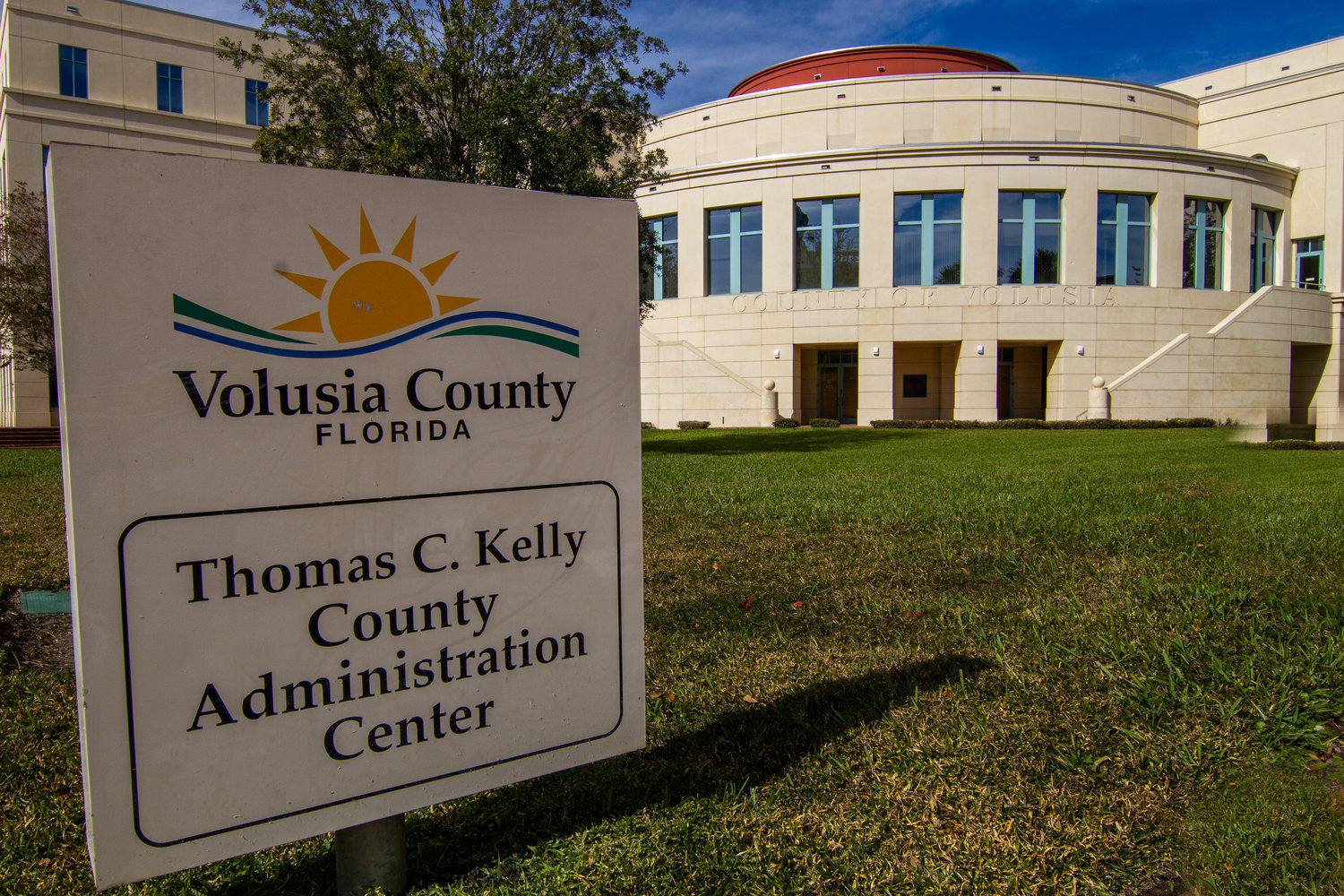


Five amendments to the Volusia County Home Rule Charter have been approved for the 2026 ballot. These five initiatives will be considered by Volusia voters to be enshrined into the county’s foundational governing document. The five initiatives headed to the ballot were submitted by the 2026 Charter Review Commission. This body meets every ten years to review the current Charter and come up with amendment recommendations to submit to the Volusia County Council. 15 members sit on the Charter Review Commission. Perhaps the most drastic change in the five proposed amendments is the first, which would transform the makeup of the County Council. Presently, the Council is made up of one Chair seat voted on at-large, five district-specific Council members, and one additional at-large Council member. Amendment 1 would make the Volusia County Council Chair a position which was chosen annually by the Council itself. Volusia voters would no longer choose the ranking member of the Council for the entirety of that member’s four-year term. The second amendment would change the language of how Council members are reimbursed for work-related expenses both inside and outside of the county. The third amendment would update the Charter’s language in accordance with a 2018 Florida Constitutional Amendment that mandated how counties organize their constitutional officers. The fourth amendment would remove a Charter provision setting personnel system requirements for certain employees, instead granting that power to the Council. The fifth amendment would create a registry of protected conservation lands. This would require a majority plus one vote to add or remove properties from the list. Proposed Charter Amendments The full text of the five proposed charter amendments is as follows, per the 2026 Charter Review Commission Final Report. 1. County Chair Appointed by Elected County Council Members and more Restrictive County Council Term Limits Prior to the adoption of a Charter amendment in 2002, the County had seven elected Council Members (i.e., 5 district members and 2 at-large members) to serve on the County Council, each with the same powers and duties. At the beginning of each year, the Council itself would vote to appoint one of its members as the Chair for a term of one year to preside over County meetings. The CRC opted to examine going back to this system as it allowed the Council to select a Chair on an annual basis and allowed the Council Members to occupy uniform status while providing opportunities for different Council Members to serve as Chair each year.The CRC referred the matter to the Government Structure and Housekeeping Subcommittee, which reviewed the proposal and determined that in addition to having the Chair elected by the Council, there should be further term limit restrictions placed upon Council Members. Historically, term limit restrictions applied only to a particular Council seat. Therefore, a district Council Member could, after reaching a limit of two terms in that position, run for one of the at-large seats and potentially serve two additional four-year terms. The Subcommittee ultimately decided upon a restriction that would prohibit a Council Member from qualifying for office if, at the end of their current term, such member will have served (or, but for resignation, would have served) on the County Council for eight consecutive years. The Subcommittee approved the proposal as such and returned it to the CRC, which approved the measure for inclusion as a proposal on the 2026 ballot. 2. Removal of Charter Limitations Regarding Reimbursement of Work-Related Expenses Incurred by County Council Members The CRC discussed County Council Member compensation, noting that prior CRCs had attempted to either raise Council Member salaries or allow reimbursement of both in-county and out-of-county expenses. Currently, the County’s Charter provides for Council Members to be paid 50% of what is prescribed by state law, with the Chair being allowed 60% of the prescribed amount. While the Charter requires that out-of-county expenses of Council Members be reimbursed or otherwise paid as provided for by law, the Charter outright prohibits Council Members from being reimbursed for in-county expenses.The CRC reviewed concerns that the combined effect of limited compensation and prohibition against reimbursement for in-county expenses caused Council Members to frequently incur unreimbursed costs to attend meetings and community events, which limited or otherwise discouraged Council Members from participating in such matters.The CRC referred the issue to the Government Structure and Housekeeping Subcommittee, which conducted further discussion. Ultimately, the Subcommittee approved a proposed Charter amendment that would remove both the Charter’s (i) prohibition against the reimbursement of in-county expenses and (ii) express authorization of reimbursement of out-of-county expenses. Removal of the last sentence of § 304 of the Charter would leave the subject of expense reimbursement to be addressed by County ordinance and any applicable County travel and expense policies. 3. Amend Charter to Reflect Changes Made to Florida Constitution as to County Constitutional Officers In 2018, voters approved an amendment to the Florida Constitution (Amendment 10) that required all 67 counties in Florida to maintain separate constitutional offices of the Sheriff, Tax Collector, Elections Supervisor, and Clerk of Courts. Prior to the adoption of Amendment 10, Volusia County had, by Charter, uniquely consolidated the offices of the Sheriff, Property Appraiser, and Elections Supervisor under the umbrella of county government as elected county department heads and abolished the office of the Tax Collector.Following the effective date of Amendment 10 (i.e. 2021), provisions in the Charter pertaining to or referencing the Sheriff, Property Appraiser, Supervisor of Elections, and Tax Collector were either superseded or made obsolete by Amendment 10’s requirements. Since 2021, the County has interpreted its Charter in a manner consistent with general law while disregarding those provisions deemed no longer valid or applicable as a result of Amendment 10; however, the CRC determined that an amendment updating the County’s Charter was desirable.The CRC referred the matter to the Government Structure and Housekeeping Subcommittee, which concurred and approved a draft amendment and ballot language repealing the obsolete language in the Charter, which the CRC approved as a proposed Charter amendment to be included on the 2026 general election ballot. 4. Remove Personnel Administration Provisions from the Charter and Require such be Established by Ordinance The CRC reviewed whether it was necessary to include a detailed section in the Charter pertaining to the qualifications and duties of the human resources director as well as mandatory personnel policies pertaining to the appointment of personnel boards and referred the matter to its Government Structure and Housekeeping Subcommittee. The Subcommittee also questioned whether it was necessary to have such detailed personnel provisions in the Charter and approved an amendment that would simplify Article X of the Charter by removing provisions governing the personnel board’s and human resource director’s appointment, qualifications, and powers and duties. The proposed amendment would remove requirements regarding the adoption of and amendments to the County’s merit system as well as Charter designated distinctions between classified and unclassified service, ultimately requiring only that the County establish a merit system for County employees and adopt one or more ordinances to implement the system. The CRC approved the Subcommittee’s recommended language, thus moving the proposal forward to the ballot. 5. Conservation lands registry The CRC discussed methods to better protect conservation lands acquired or otherwise maintained by the County through its Volusia Forever program. Members referred the matter to an Environmental & Conservation Subcommittee for further consideration. Both the CRC and Subcommittee received presentations from County staff on the current protections for such lands under the County’s Volusia Forever program.Ultimately, the Subcommittee approved a proposal, later approved by the CRC, that would create a registry of conservation lands to which the County Council could add or remove lands by resolution approved by a majority plus one vote of the entire County Council (i.e., 5 of 7 members voting to approve or disapprove either the addition or subtraction of such lands from the registry). Once on the registry, such county conservation lands could not be sold or otherwise transferred from the ownership of the County unless approved by at least five affirmative votes.The proposed amendment included exceptions allowing such lands to be used for public purposes by the County itself or allowing for land taken by entities having the power of eminent domain where the County would not have a legal defense to such takings.Upon the Subcommittee’s presentation of the amendment to the CRC for final approval, the CRC voted to further amend the proposal so that removal of a property from the conservation land registry would, in addition to the majority plus one vote, also require notice of the sale posted on the County’s website 30 days prior to delisting together with a statement as to why the land was no longer needed for conservation purposes.If adopted, this Charter amendment would further protect conservation lands from being transferred outside County ownership and control.
5 Volusia Charter Amendments Headed to Ballot